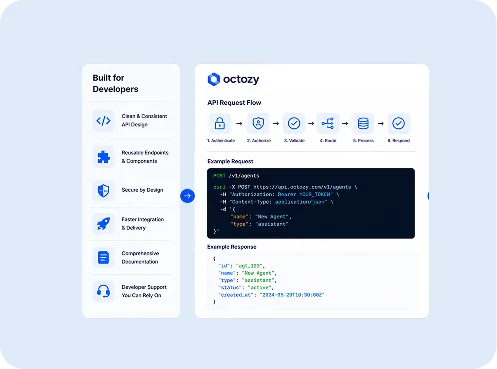
Developer Friendly
Clean documentation, logical endpoint naming, versioning support, and simple onboarding.

The Octozy Platform Interface (OPI) is the central API foundation for secure integrations, faster product delivery, reliable data exchange, and scalable service orchestration.
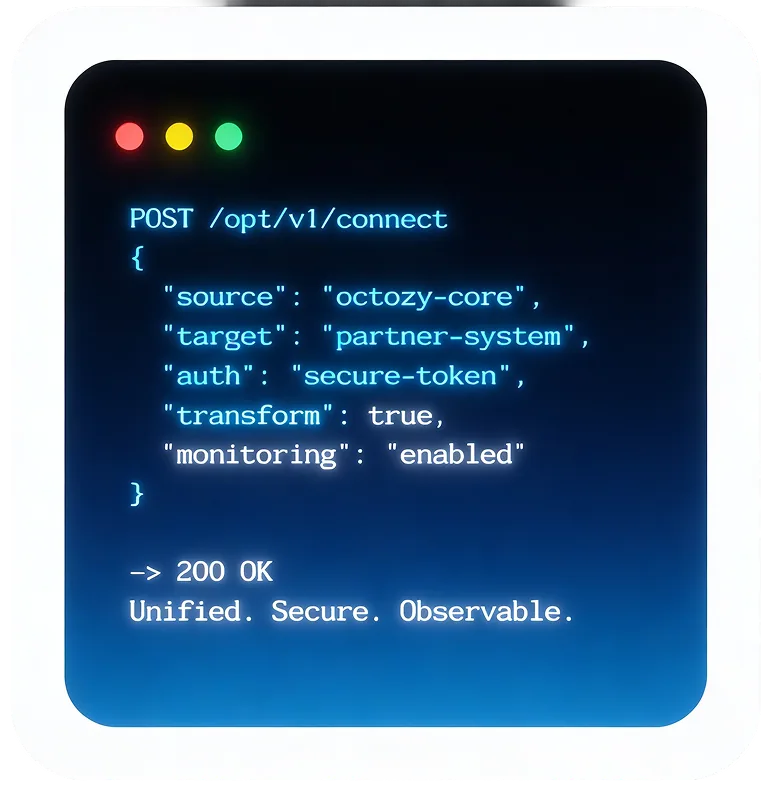

OPI gives teams a stable foundation for building, connecting, protecting, and observing every digital interaction across the Octozy ecosystem.
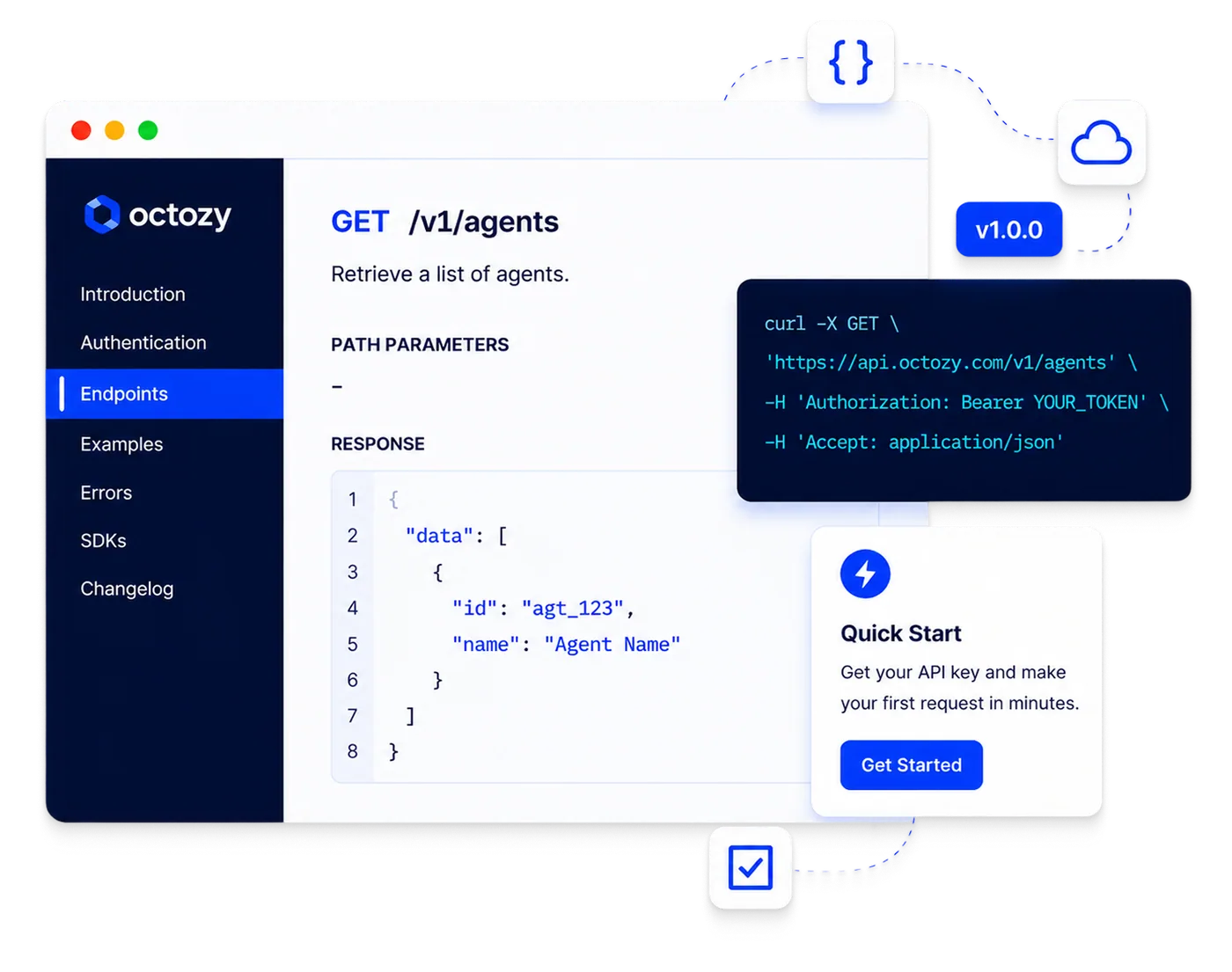
Connect products, partner systems, and services through one consistent interface.
Reusable endpoints and predictable response patterns reduce custom development.
Authentication, access control, validation, and audit tracking built in.
Clean contracts, predictable behaviour, and full visibility from the first integration.
Clean documentation, logical endpoint naming, versioning support, and simple onboarding.
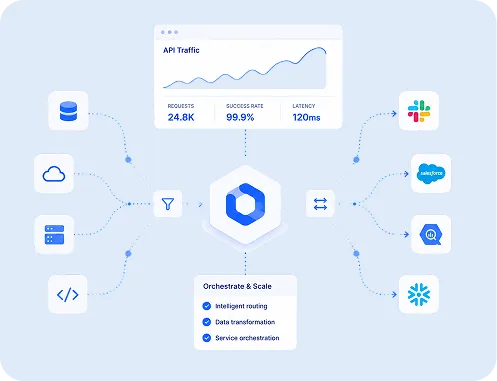
Route, transform, and orchestrate data across services as your stack grows.
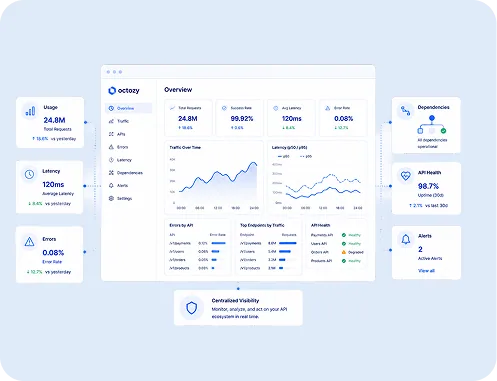
Monitor usage, latency, errors, dependencies, and API health centrally.
From secure access to service orchestration, OPI helps teams ship integrations without rebuilding API infrastructure for every project.

OPI sits between applications, services, and external platforms, giving Octozy a single place to manage policies, data contracts, traffic, and observability.
Web, mobile, admin portals, automation tools
Security, routing, transformation, monitoring
Octozy services, databases, workflows, partner systems
Real feedback from teams who transformed their operations with Octozy.
The things organisations want to know before they commit. If yours is not here, our team is happy to talk it through.
Most organisations come to us juggling separate systems: one for jobs or members, another for finance, and everything else living in spreadsheets and inboxes. Whether you are dispatching crews, opening season registrations, running club events, tracking accreditations, or coordinating donors and volunteers, Octozy brings it together, so there is one record everyone works from instead of several that quietly disagree.
Octozy is configured around your workflows rather than forcing your team into a fixed process. Job types, forms, approvals, and reporting are all set up to match how your organisation actually runs, which is why the same platform works for a field services crew dispatching vans and an association managing accreditations.
Then this is a good time to improve it. Octozy is built on patterns proven across organisations doing similar work, so you can start from a sensible default rather than a blank page, and keep the parts of your process that genuinely make you different. Simply digitising a broken process only makes it faster to go wrong, so we will tell you where we think there is a better way.
It comes with you. Before anything moves we work through what needs migrating, what can be archived, and what is worth cleaning up first, so you start on records your team can trust rather than importing years of mess.
Your staff work in the Octozy backend. Members, customers, agents, and event organisers get their own secure portals and mobile access, where each role sees only what it needs. That is what takes routine questions off your team without giving anyone more access than they should have.
No. Everyday administration is built for the people already doing the job, not for developers. If you want deeper integration, the Octozy Platform Interface gives your own developers or IT partner a documented API layer to work with.
Yes. You do not have to replace everything at once. The Octozy Platform Interface is our integration layer for connecting accounting, payment, identity, and other third-party systems, so Octozy sits alongside the tools you want to keep.
Access is controlled by role, so people only see what they are entitled to, and changes are recorded in an audit trail you can review. For the specifics on hosting, backups, and compliance, our team can walk you and your IT people through the detail.
Pricing scales with the size of your organisation rather than assuming one shape fits everyone. You can be charged on user licences or on transaction volume, whichever better reflects how you actually operate, and Octozy can run on shared, hybrid, or private cloud depending on your control and security requirements. Keeping the total cost of ownership low is a deliberate goal, implementation included, so you are not paying for a long project before you see any value.
Talk to us about the right fitYou already know which part of your operation is holding you back. Request a demo and watch Octozy handle that one, not a polished example.
Request Demo